If you’re looking for a video editor, the obvious move is a freelance marketplace right? Search “best video editor” sort by reviews, hire whoever has the flashiest portfolio. It’s tempting because it’s fast, easy ansd seems like the default way of doing it.
But a good video editor and the right video editor for your content aren’t really the same thing. Let me Explain…
The best editor for a real estate YouTube channel might be a poor fit for an educational channel. Someone excellent at short-form ads might have no instinct for long-form documentary work.
Video editing isn’t just knowing Premiere Pro, DaVinci Resolve, or After Effects
it’s understanding your content niche, your audience, pacing, and the creative goal sitting underneath all of it.
So how do you actually find the right person?
Start by Asking Other Creators
If you know other creators, this is the first place to look. Ask who they work with, whether they’ve stuck with that editor for a while, and whether they’d hire them again. Someone you already trust saying “I’ve used this editor for two years, I’d absolutely recommend them” is a very different signal than a five-star rating on a marketplace. Because a portfolio shows you what someone can make, and a recommendation tells you what they’re actually like to work with.
You can also ask to see the real videos that editor has made for them, not just their curated highlight reel. That’s the difference between watching someone perform and watching them actually work.
What If You Don’t Know Any Creators?
Look for people already making content close to what you want to make. Check their profiles, descriptions, and socials. Sometimes creators credit their editor directly, and if they do, that’s your opening.
But there’s a better move than just fishing for a name.
Instead of asking “who’s your editor,” try asking: “Would you be willing to spend 20 minutes helping me understand what I should look for when hiring one?” You’re borrowing someone else’s already-paid-for experience, the mistakes they made, the red flags they learned to spot, the style that actually worked for their niche. And don’t assume that time should be free. Offer to pay for it, or trade something useful, like a testimonial. Twenty minutes of someone else’s hindsight can save you weeks of trial and error. You can pay back them for their time with literal money or at least a LinkedIn Recommendation, pretty much all createors that I have worked with had proper LinkedIn page.
Don’t Just Look at the Portfolio
A portfolio answers one question: can this person make something that looks good? It doesn’t answer whether they can make something that works for your content specifically. An editor can have a stunning and flashy reel, showing all the effects out there and almost no significant experience with the kind of video you actually need.
Ask them to show you something closer to what you’ll be asking them to make, and when they do, ask what they actually did on it. Did they cut the whole thing themselves, or follow someone else’s detailed brief? Did another person handle the motion graphics? Was there a creative director shaping the decisions? The answer is important tells you far more about their real experience than the polish of the final cut.
Look for Experience in Your Niche
This part gets overlooked constantly. Editing isn’t just execution, it’s research as well. For example, I’ve spent years editing for injury lawyers, real estate agents, and e-commerce brands, so I already know the terminology, the pacing expectations, the kind of visuals that actually land with each audience.
Hand me a motion-graphics-heavy series explaining algebra to high schoolers, (sorry! man I couldnt think of a better example haha) and I could figure it out. Would I be the best person for the job? Probably not. Someone who’s already spent years in educational content has an instinct I’d have to build from scratch. So instead of asking “have you edited videos before,” ask “have you edited this kind of video before?” That one word changes the whole question.
Ask How They Approach Research
If your content touches law, finance, science, or any specialized subject, ask how the editor handles material they don’t already know. You don’t need someone who already knows your industry on their fingertips. You need someone who knows how to learn enough of it, fast, to make intelligent editing decisions. Ask what they do when something in the footage doesn’t make sense to them, and how they decide which visuals actually support what’s being said. The answer separates someone who follows instructions from someone who can think alongside you.
Have a Real Conversation Before Hiring
Don’t reduce the hiring process to “here’s a video, how much?” Talk about what you’re building, who it’s for, what you want it to feel like and just as importantly, what you don’t want. Maybe you hate excessive zooms, or captions on every single word, or stock footage that doesn’t add anything. Say so, because it is very important.
There’s a real difference between telling an editor “don’t use this transition” and telling them “I want this to feel clean and intentional, I don’t want effects distracting from the information.” The first is a rule for one video. The second is a principle they can carry into every video after it, which is the whole point, because you don’t want to be issuing instructions forever. You want them to eventually make those calls themselves.
The goal isn’t just hiring an editor. It’s building a second brain for your content.
Ask About Their Capacity
This matters most with editors who already have an established client list. “Yes, I’m available” and “I have enough bandwidth to actually give your content attention” are not the same sentence. Ask how many clients they’re juggling, whether they personally edit every project or outsource pieces of it, and what happens if they suddenly can’t take on work. Again you’re not just hiring a skill set, you’re hiring a slice of someone’s attention, and that slice has a ceiling, a capacity, a limit.
Don’t Make Marketplaces Your Only Option
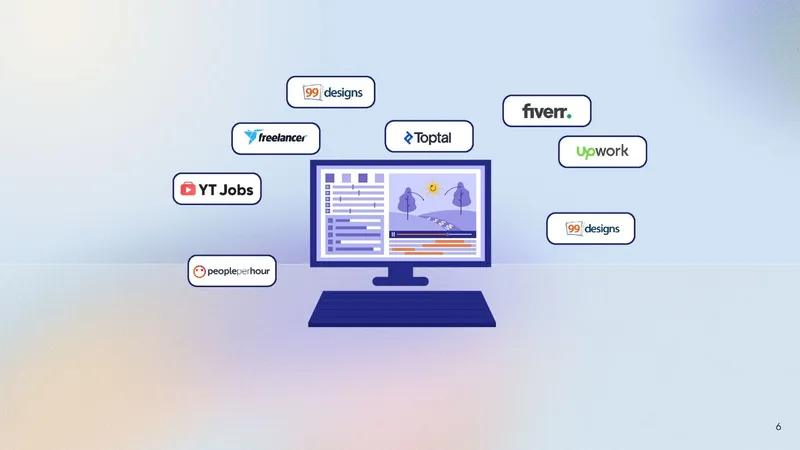
Upwork and Fiverr have real talent on them, and I wouldn’t tell you to avoid them entirely. But the best editor for you may never be the one who happens to rank highest in a marketplace search, and most likely a freelancer there, is fielding ten inquiries at once and most likely splitting attention ten ways whether or not the work stays good. A direct recommendation from someone in your network is often worth more than any star rating.
Do a Paid Trial Edit
Once someone looks promising, don’t jump straight to a long-term arrangement. Run a trial. And pay for it. Asking a professional to spend hours cutting your footage for free isn’t a favor to you, it’s unpaid labor competing against everyone else’s paid work on their schedule. A paid trial also sets the tone for a professional relationship from day one.
Give them real footage and enough context to actually understand the goal, then watch what they do with it. Hold back a few instructions on purpose, and see how they handle those decisions on their own. Did they completely miss the mark, or did they actually try to solve it themselves?
If they land anywhere near 50% of what you had in mind without being told, that’s a good sign. You can teach them the other half and once you do, they’ll keep reusing that same instinct on their own. A good editor might not make a decision at all and ask you first, also a good sign.
Judge Their Thinking, Not Their Font Color
This is the part people get wrong most often. Don’t fixate on the font, the exact shade of a color, or a transition you’d have picked differently. Those are thirty-second fixes solved by 3 clicks. What you’re actually evaluating is whether they understood the content, identified what mattered, made good pacing calls, chose useful B-roll, and followed the direction without needing every decision spelled out.
Creative judgment takes years to build. A font takes thirty seconds to change.
Give Strong Feedback Early
The first few projects set the foundation for everything after. Be honest from the start. I rather ask my client to be brutally honest If the pacing’s off, say why; if there’s too much visual noise, name it. Don’t say “looks good” when it doesn’t. You’re teaching your editor what “good” actually means to you, and the more specific you are early, the less you’ll need to explain later. Eventually a good editor starts anticipating your taste before you’ve said a word. That’s when the relationship stops being transactional and starts being genuinely useful. And don’t mind if they push back. They are doing this for a while, they might be right.
There Is No “Best” Video Editor
There’s only the best editor for your specific content, audience, and way of working. Someone who makes incredible cinematic documentaries might be the wrong fit for your weekly YouTube upload. Someone who nails viral short-form might have no instinct for a long-form personal brand.
So don’t ask who the best video editor is. Ask who’s the best editor for what you’re actually trying to build. Then go find them through people you trust, look past the portfolio, check their capacity, run a paid trial, and give them honest feedback from the first project on.
The right editor isn’t just someone who makes your videos look better. They’re someone who eventually understands what you want before you have to explain it.
- this blog was originally written on August 18, 2026. And edited/re-published on Augest 30, 2026.